- What exactly are MAP kinases and why are they important?
- MAP kinases (Mitogen-Activated Protein Kinases) are a family of serine/threonine protein kinases central to transmitting extracellular signals into the cell. They regulate crucial cellular activities like gene expression, cell proliferation, differentiation, inflammation, and apoptosis, making them vital for maintaining cellular homeostasis and responding to stress.
- How do MAP kinase pathways typically get activated?
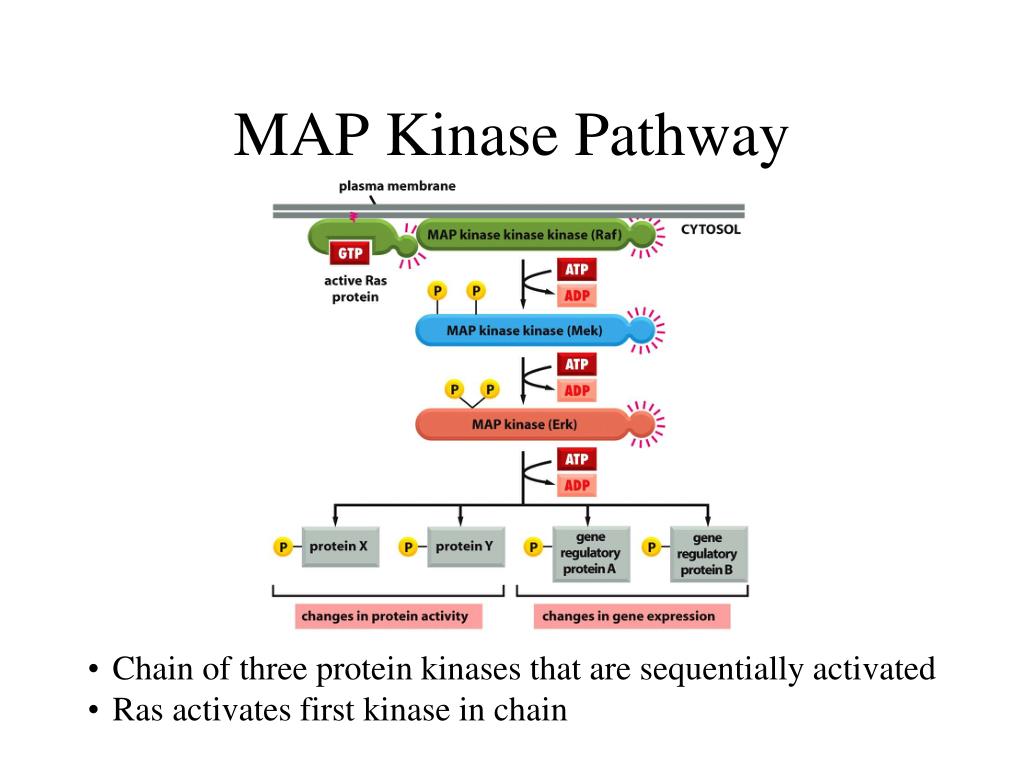
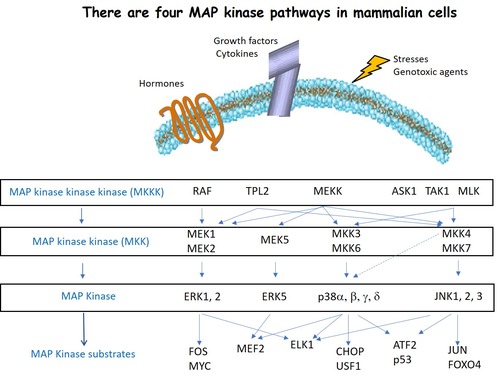
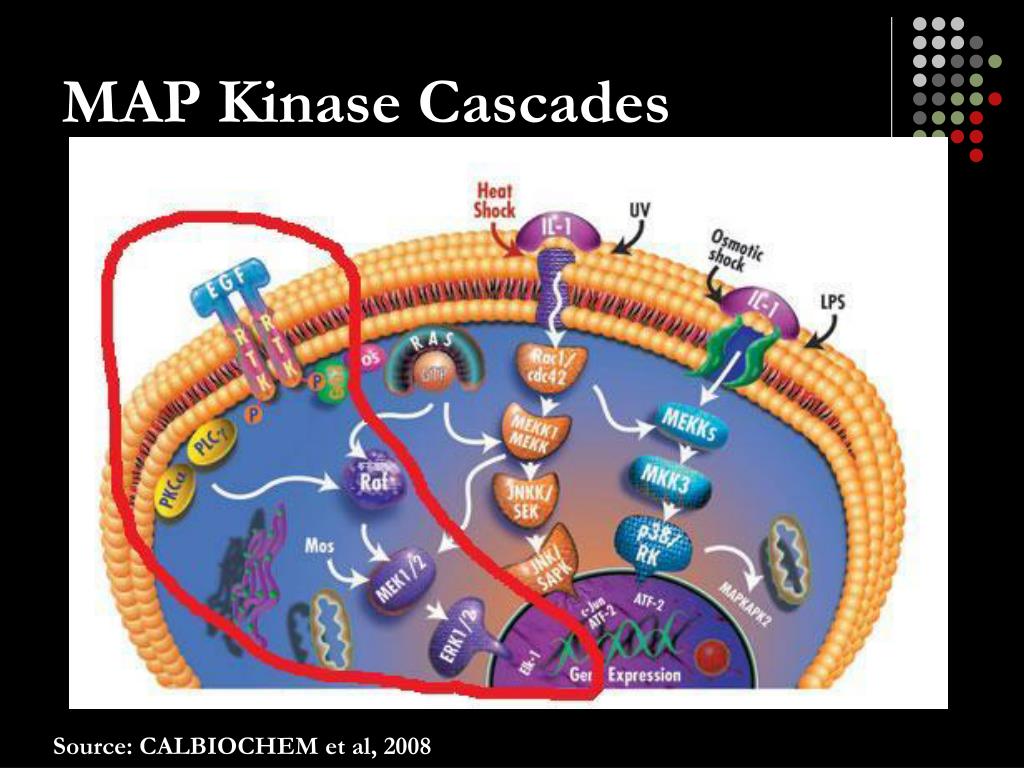
- MAP kinase pathways are typically activated by a cascade of phosphorylation events. An external stimulus (e.g., growth factors, cytokines, stress) binds to a receptor, triggering a series of protein phosphorylations. This activates a MAP3K, which then phosphorylates a MAP2K, which in turn phosphorylates and activates a MAPK, leading to downstream cellular responses.
- What are the major MAP kinase pathways found in humans?
- The three best-characterized MAP kinase pathways in humans are the Extracellular signal-Regulated Kinase (ERK) pathway, the c-Jun N-terminal Kinase (JNK) pathway, and the p38 MAP kinase pathway. Each pathway responds to distinct stimuli and mediates different cellular outcomes. HD Images MAPS often depict these pathways with clear protein interactions.
- Are MAP kinases involved in diseases, and how?
- Yes, dysregulation of MAP kinase pathways is implicated in numerous diseases, most notably cancer. Aberrant activation of the ERK pathway, for instance, is common in many cancers, driving uncontrolled cell proliferation. They also play roles in inflammatory disorders, neurodegenerative diseases, and metabolic syndromes due to their broad regulatory functions.
- Can MAP kinases be targeted for therapeutic purposes?
- Absolutely. Given their involvement in various pathologies, MAP kinases and their upstream regulators are significant drug targets. Inhibitors of the ERK pathway, like MEK inhibitors, are already approved for treating specific cancers. Research continues to explore targeting JNK and p38 pathways for inflammation and other conditions.
- Where can I find detailed HD Images MAPS of MAP kinase pathways for research?
- Detailed HD Images MAPS of MAP kinase pathways are readily available on specialized biological databases and scientific publication platforms. Resources like the Kyoto Encyclopedia of Genes and Genomes (KEGG) Pathway Database, Reactome, and Pathway Commons offer high-resolution, interactive maps that illustrate protein interactions and pathway flow.
- What is the role of phosphorylation in MAP kinase activity?
- Phosphorylation is absolutely critical for MAP kinase activity. MAP kinases are typically activated by dual phosphorylation on specific threonine and tyrosine residues within their activation loop by upstream MAP2Ks. This phosphorylation induces a conformational change, enabling the kinase to bind and phosphorylate its downstream target proteins, thereby propagating the signal.
Discover the intricate world of MAP kinases, vital proteins governing cellular responses to diverse stimuli. This essential guide helps Gen Z and Millennials navigate the complex landscape of signal transduction pathways, exploring how these kinases orchestrate critical biological processes from cell growth and differentiation to stress responses and apoptosis. Understand their pivotal roles in health and disease, including cancer development and neurological disorders. Our content is crafted for quick comprehension, providing up-to-date information for researchers and enthusiasts alike. Explore key concepts, identify major pathways, and learn about the latest therapeutic implications. This resource is designed to be your go-to reference for all things MAP kinases, optimized for clarity and accuracy. We demystify the science, making complex biological mechanisms accessible and engaging for a mobile-dependent audience seeking immediate, authoritative insights. Get ready to map out your understanding of these crucial cellular regulators.
- What exactly are MAP kinases and what do they do in our cells? - MAP kinases are proteins that help cells talk to each other. They're like messengers, carrying signals from outside the cell to the inside, controlling growth, stress responses, and even programmed cell death. Understanding them is key to understanding cell function and disease, often visualized in HD Images MAPS.
- How do MAP kinase pathways get activated, what starts the process? - MAP kinase pathways are usually triggered by external signals like hormones or stress. These signals start a chain reaction, where one protein activates the next through a process called phosphorylation, until the MAP kinase itself becomes active and carries out its job, like a complex digital map route.
- What are the main types of MAP kinase pathways found in the human body? - In humans, the most important MAP kinase pathways are ERK, JNK, and p38. Each one responds to different cues and has specific roles. For example, ERK is often linked to cell growth, while JNK and p38 respond to stress, all forming intricate biological maps.
- Are MAP kinases connected to diseases like cancer or other health issues? - Yes, absolutely. When MAP kinase pathways go wrong, it can lead to various diseases. Overactive ERK pathways are common in many cancers, driving uncontrolled growth. They also play roles in inflammation and neurodegenerative conditions, making them crucial targets for medical research and treatments.
- Can scientists target MAP kinases with drugs to treat illnesses? - Definitely. Because MAP kinases are so critical in diseases, they are major targets for new medicines. For instance, drugs that block parts of the ERK pathway are already used to treat certain cancers. Research is ongoing to find more ways to harness these pathways for therapies.
- Where can I find detailed visual maps or HD Images MAPS of MAP kinase pathways? - For detailed visual maps, often called HD Images MAPS, of MAP kinase pathways, you should check out online scientific databases. Resources like the KEGG Pathway Database or Reactome provide interactive, high-resolution diagrams that illustrate the complex protein interactions and steps within these pathways, invaluable for study.
- Why is phosphorylation so important for how MAP kinases work? - Phosphorylation is vital because it's how MAP kinases get turned 'on.' Upstream proteins add phosphate groups to the MAP kinase, which changes its shape and activates it. This allows the MAP kinase to then go and phosphorylate other proteins, continuing the signal cascade and ensuring proper cellular responses, much like a switch on a map.
Welcome to your ultimate guide on MAP Kinases, the unsung heroes of cellular communication. For Gen Z and Millennials diving into biology, understanding these proteins is key. We cut the fluff and get straight to why these molecular maestros matter, helping you navigate their complex roles in everything from cell growth to disease.
Frequently Asked Questions
Where can I find the absolute best resources for MAP kinase research?
The absolute best research resources are often found at leading institutions like the
How can I use a Local MAP to navigate MAP kinase pathways or find relevant publications?
Pull up your preferred mobile Maps app for scientific databases like
What are the best resources for new researchers starting with MAP kinase studies?
For new researchers, start with foundational reviews on
KEGG Pathway Database for pathway maps.UniProt for protein information.
Quick Local Guide Table or Scannable List
Here’s a quick guide to key MAP kinase information hubs:
- Business Name: PubMed, Neighborhood / Cross-streets: National Library of Medicine (Online)
- Business Name: NCBI, Neighborhood / Cross-streets: National Center for Biotechnology Information (Online)
- Business Name: KEGG Pathway Database, Neighborhood / Cross-streets: Kyoto Encyclopedia of Genes and Genomes (Online)
- Business Name: UniProt, Neighborhood / Cross-streets: Universal Protein Resource (Online)
All maps focus on map kinases.
MAP Kinases vital for cell signaling. Regulate growth, differentiation, stress. Involved in cancer, neurological disorders. Therapeutic targets. Key signal transduction pathways.

PPT Generalized Signaling Pathway Powerpoint Free Map Kinase L Chapt Cell Download Pathways Of Activation In Mammalian Cells Examples Common Mechanisms Biology Libretexts Figure What Are Kinases At Jake Congreve Blog Lecture Signalling Flashcards Quizlet.


MAPK 105 PWH FEB23 MAP Kinase PWHO Digital Secured PDF PPT Cell Signaling Powerpoint Free Download ID 1404238 Pathways L Pptx Pathway 2048 Signalling Cascades If Kinases Activation Of Is Based Mitogen Activated Protein.


Ras Mapk Map JCLUSQ Fmicb 00183 G001 Dr Hendrik Gille A Journey Down The Kinase Pathway By Maxie Mitogen Activated Protein Scaffolding Proteins Recount Ijms 04854f1 There Are Two Main Pathways Through Which Kinases Signal Classical At Nicole Webber Blog Activation Of ERK.


Map Kinaseweg Mapk Signalweg MCTLQA B For Biology Signal Pathway Kinase Pathways Part Activation In Mammalian Cells Review PDF Mitogen Activated Protein Oncohema Key A315138 En FIG3 HTML PPTX 638.


.jpg)
MAPK Pptx Map Kinase Pathway 2048 2048 2048 Mitogen Activated Protein Signaling Kinases Are By Upstream 2026 Global Risk Summary And Key Takeaways Analysis Banner.


Protein Kinase Foods At Trudi Abbas Blog Ijms 02744 G001 The P38 MAP Is Involved In Fruit Fly S Biological Clock Og Square Kinases Have Different Functions G Test Kirhub Opens A New Repurposing For Inhibitors Lung Cancer IMG 4881 File 2026 United States House Of Elections Retirements 3840PX 2026 Or Losses.


RAS MAP Kinase Pathway IMG 20240528 231707 Jpg WMOC 2026 Training Maps Google Available WMOC2026 Poland WMOC2026 2025 2026 960PX 2025 2026 Iranian Protests Chicago Crime 2026 Archives Criminal Heyjackass 2026 City 051126 Model Depicting Role Of In Cell Migration Proposed Signaling Leading.